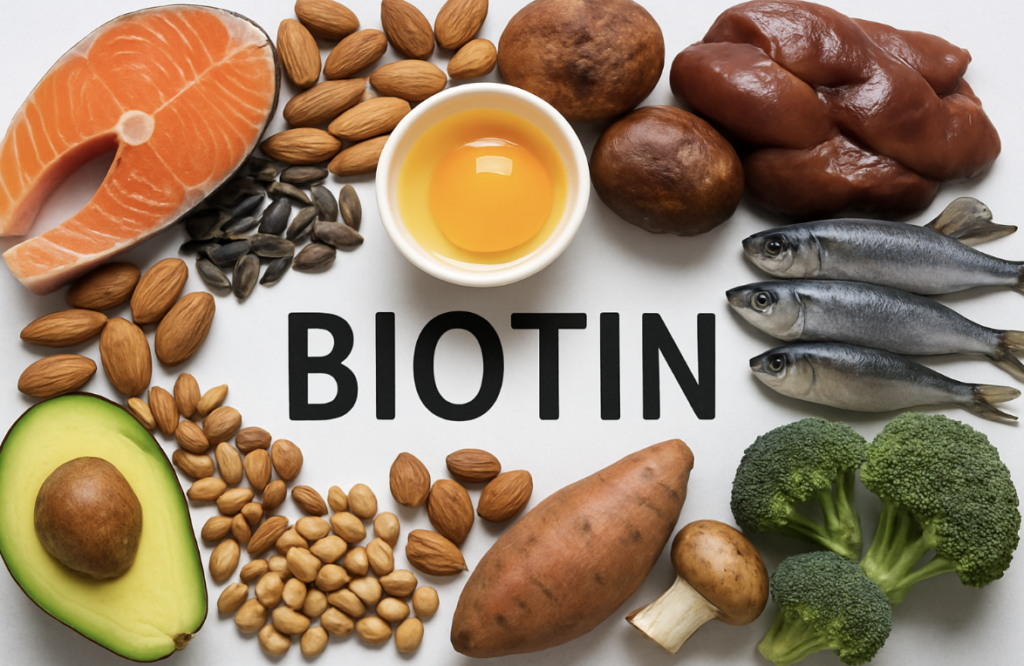
Biotin is sold everywhere as a “hair, skin and nails” vitamin. The marketing is stronger than the research. This guide explains what biotin does, what the evidence says about hair, which foods contain it, and an important safety issue: high-dose biotin can distort medical lab tests.
Quick answer
- Biotin (vitamin B7) helps your body turn food into energy, and true deficiency is uncommon.
- Biotin deficiency can cause hair loss, but there is little evidence that taking extra biotin grows hair in people who are not deficient.
- High-dose biotin can falsely change results of some blood tests, including thyroid, hormone and heart (troponin) tests. The FDA has warned about this.
- Most people can get enough from food.
What biotin does
Biotin is a water-soluble B vitamin. It acts as a helper (coenzyme) in the breakdown of fats, carbohydrates and proteins. Adults need a small amount, around 30 micrograms a day.
Does biotin help hair growth?
Severe biotin deficiency can cause hair thinning and skin rashes, but deficiency is rare. Reviews of the research conclude that there is no good evidence that biotin supplements promote hair growth when you are not deficient, and a study of people with telogen effluvium found their biotin levels were normal. Supplements are more likely to help people with a diagnosed deficiency or a rare metabolic condition.
Many hair-and-nail products contain doses far above the amount you need. More is not better, and it creates a safety problem, explained next.
Biotin can interfere with blood tests
Many lab tests use a biotin-based technology. High levels of biotin in your blood can make results falsely high or falsely low. In 2017 the FDA warned that this can affect tests for thyroid hormones, other hormones and troponin, a marker used to diagnose heart attacks. The FDA reported a case in which a falsely low troponin result was linked to a missed heart attack and a death.
- If you take biotin, tell your doctor and the lab before any blood test.
- Your doctor may ask you to pause it for a period before testing. Follow their advice.
Food sources of biotin
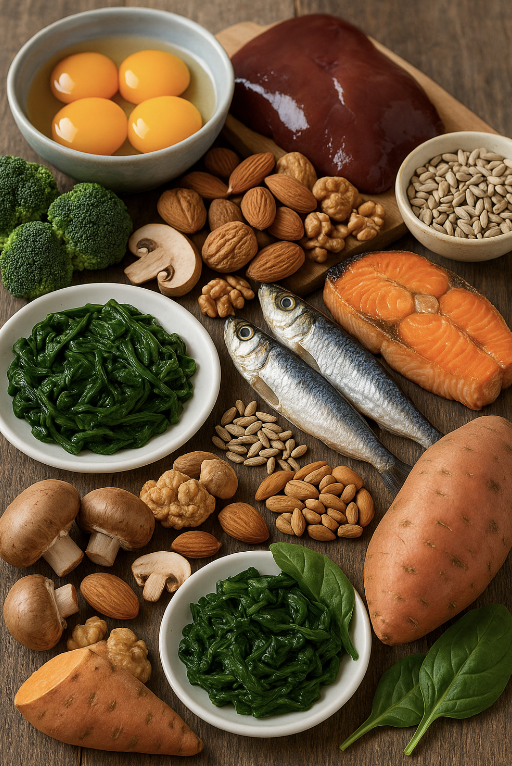
- Cooked eggs, especially the yolk
- Salmon and other fish
- Nuts and seeds
- Sweet potatoes
- Legumes and some vegetables

Should you take a biotin supplement?
- Only if a doctor has confirmed a deficiency or advised it.
- If you want a hair-friendly diet, focus on enough protein, iron and a varied diet.
- If you are losing hair, find the cause first. See hair thinning and hair loss and, after stopping birth control, what to expect.
Frequently asked questions
How long until biotin works?
If you are not deficient, there is no reliable evidence it works at all, so waiting months may just waste money.
Can biotin cause side effects?
It is generally well tolerated, but high doses can interfere with lab tests. Some people report acne-like skin changes, though research on this is limited.
Can I get enough from diet?
Yes. Most people with a varied diet get enough biotin.
Sources
- Biotin — NIH Office of Dietary Supplements
- Biotin Deficiency in Telogen Effluvium: Fact or Fiction? — PMC
- The Role of Vitamins and Minerals in Hair Loss: A Review — PMC
- Is Biotin Safe for Dermatology Patients? — PMC
- Testing for Biotin Interference in In Vitro Diagnostic Devices — FDA
Medical disclaimer: This article is for general information only and is not medical advice. It may contain inaccuracies or may not apply to your situation. Please talk with a doctor or pharmacist before making decisions about supplements, medicines or treatment.