
How High Cortisol Levels Quietly Block Fat Loss and What Actually Helps
If You’re Doing Everything Right—But Still Not Losing Weight
You’re eating better.
You’re moving more.
You’re trying to stay consistent.
Yet the scale barely moves.
This is where most weight loss advice fails to mention a critical factor: chronic stress.
Stress doesn’t just affect your mood—it directly changes how your body stores fat, regulates hunger, and uses energy. When stress becomes constant, your body shifts into survival mode.
And survival mode is terrible for fat loss.
How Stress Hormones Block Fat Loss
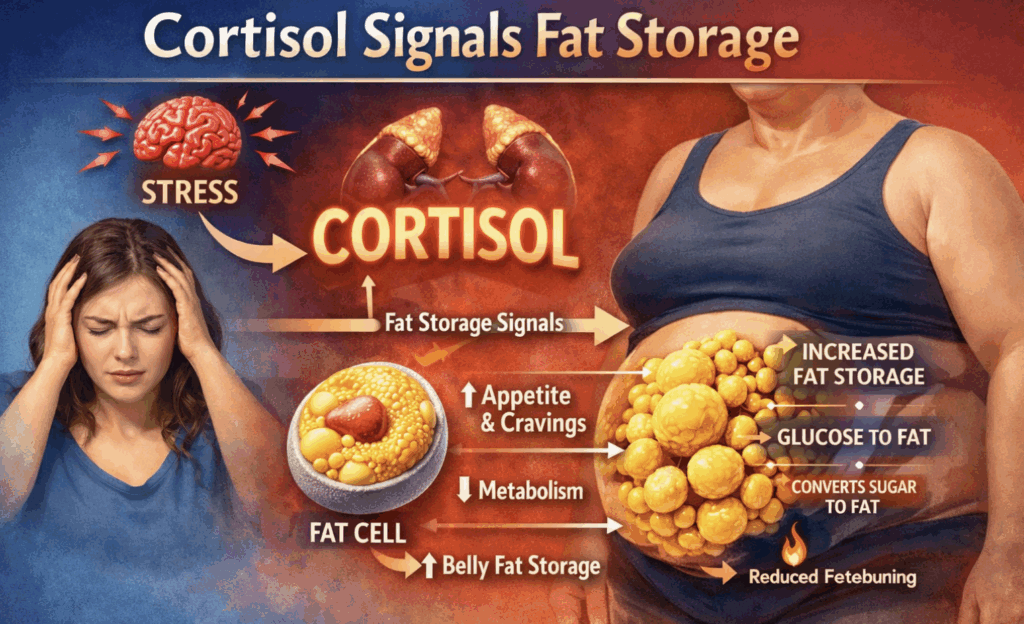
1. Cortisol Signals Fat Storage
Cortisol is your primary stress hormone. Short-term cortisol helps you respond to danger. Long-term cortisol tells your body to store energy, not burn it.
When cortisol stays elevated:
- Fat storage increases (especially abdominal fat)
- Muscle breakdown accelerates
- Metabolic rate slows
- Blood sugar becomes unstable
Your body prepares for prolonged stress—not weight loss.
2. Stress Increases Cravings and Appetite

High cortisol raises cravings for quick energy foods, particularly sugar and refined carbohydrates.
This leads to:
- Frequent snacking
- Emotional eating
- Loss of appetite control
- Blood sugar spikes and crashes
This isn’t a willpower issue—it’s a hormonal response.
3. Stress Disrupts Sleep (Which Worsens Fat Loss)

Stress and poor sleep reinforce each other.
Elevated cortisol at night:
- Delays melatonin release
- Reduces deep sleep
- Increases next-day hunger hormones
Poor sleep further raises cortisol, creating a cycle that blocks fat loss.
4. Chronic Stress Reduces Workout Effectiveness
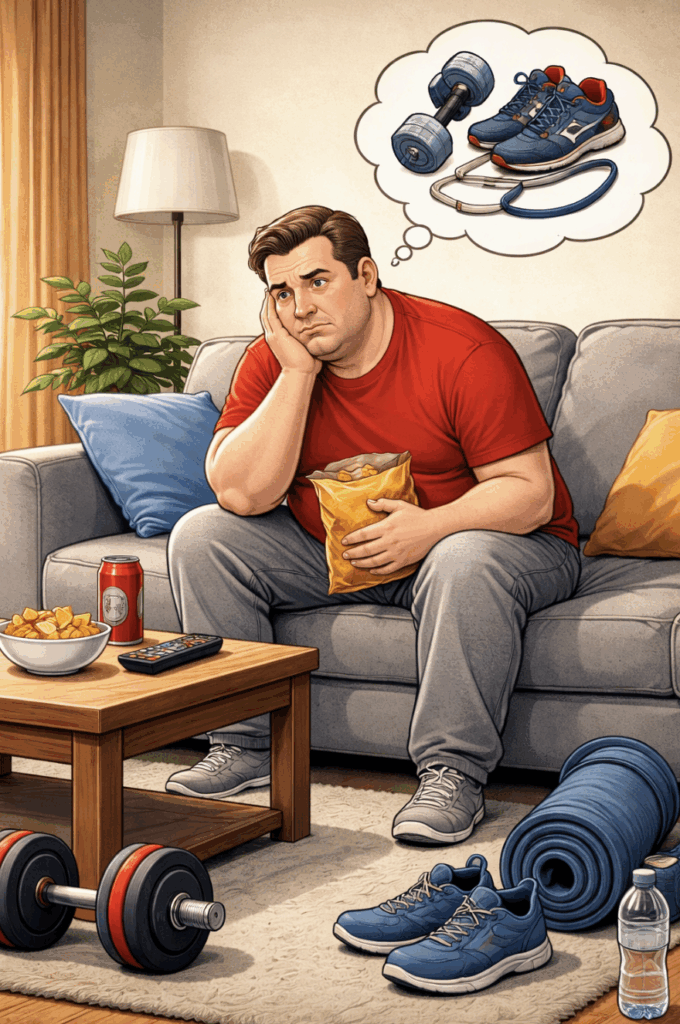
Under stress, workouts become more taxing on the nervous system.
Common outcomes:
- Slower recovery
- Increased fatigue
- Higher injury risk
- Lower calorie burn over time
More workouts don’t fix stress-driven resistance.
Signs Stress Is Sabotaging Your Weight Loss
- Weight gain around the midsection
- Constant fatigue despite enough sleep
- Strong sugar cravings
- Difficulty relaxing
- Plateaued fat loss despite consistency
If this sounds familiar, cortisol—not calories—may be the real issue.
How to Lower Cortisol and Support Fat Loss
1. Fix Your Sleep Timing First

Sleep regulates cortisol more than any supplement.
- Go to bed at consistent times
- Reduce screen exposure at night
- Get morning sunlight daily
Better sleep lowers cortisol automatically.
2. Avoid Over-Restrictive Dieting
Extreme calorie restriction raises stress hormones.
Instead:
- Eat balanced meals with protein and fiber
- Avoid skipping meals under stress
- Focus on consistency over perfection
Your body loses fat more easily when it feels safe.
3. Choose Low-Stress Movement

Not all exercise lowers stress.
Helpful options:
- Walking outdoors
- Light strength training
- Mobility work or stretching
Too much high-intensity training can increase cortisol if recovery is poor.
4. Build Stress-Reducing Daily Anchors

Small habits matter:
- Deep breathing for 5 minutes
- Short outdoor breaks
- Screen-free time before bed
Consistency beats intensity.
What Happens When Cortisol Comes Down
When stress levels improve, many people notice:
- Reduced cravings
- Easier fat loss
- Better sleep quality
- Improved energy
- Less abdominal fat retention
Fat loss becomes cooperative instead of combative.
Common Myths About Stress and Weight Loss
Myth: Stress only affects mindset.
Reality: It directly alters fat storage hormones.
Myth: More discipline fixes plateaus.
Reality: Hormonal balance matters more than intensity.
Myth: Supplements can replace lifestyle changes.
Reality: Habits regulate cortisol best.
Recommended Reading & Resources
Internal Articles
- Why Not Drinking Enough Water Is Slowing Your Fat Loss
→ Hydration supports cortisol regulation and appetite control. - Why Eating Too Fast Is Blocking Your Weight Loss
→ Mindful eating lowers stress responses during meals. - Why Morning Sunlight Helps You Lose Weight Naturally
→ Circadian rhythm alignment reduces cortisol output.
External References (High Trust Sources)
- Harvard Health – Understanding Cortisol and Stress
https://www.health.harvard.edu/staying-healthy/understanding-the-stress-response - Cleveland Clinic – Cortisol and Chronic Stress
https://health.clevelandclinic.org/how-to-reduce-cortisol-and-turn-down-the-dial-on-stress
Final Takeaway
If weight loss feels like an uphill battle despite good habits, stress—not effort—may be holding you back.
Lowering cortisol through sleep, hydration, gentle movement, and daily recovery allows your metabolism to work with you instead of against you.
Fat loss accelerates when stress levels fall.