And How Slowing Down Resets Blood Sugar, Digestion, and Cravings
The Hidden Weight Loss Mistake Almost Everyone Makes
You can eat clean.
You can count calories.
You can walk every day.
And still struggle to lose weight.
One underrated reason?
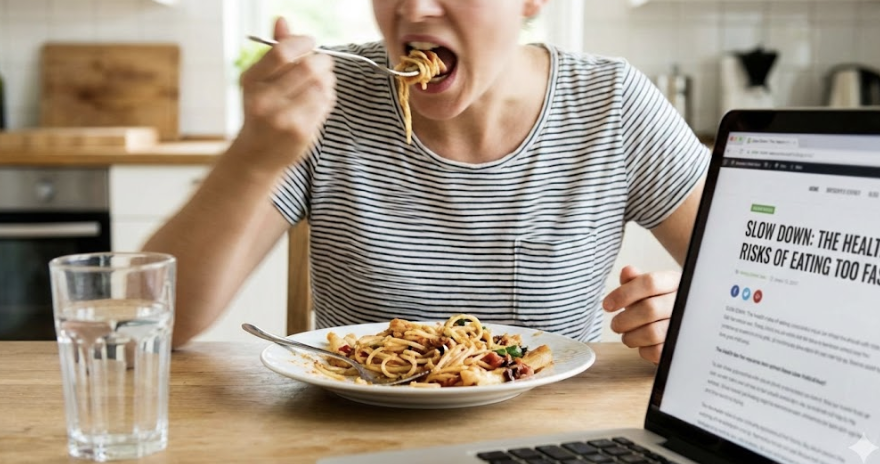
You’re eating too fast.
Modern life trains us to inhale meals between meetings, scroll through lunch, or finish dinner in under five minutes. Your body, however, was never designed for speed-eating.
When meals move too quickly, your hormones, digestion, and blood sugar regulation get thrown off. The result is:
- Poor satiety signaling
- Blood sugar spikes and crashes
- Overeating without realizing it
- Sluggish digestion and bloating
- Constant cravings
In short: your metabolism never gets a fair chance.
The good news?
You don’t need a new diet. You need a new pace.
How Fast Eating Disrupts Weight Loss
1. Your Brain Can’t Register Fullness Fast Enough
It takes roughly 15–20 minutes for your brain to receive satiety signals from hormones like leptin, ghrelin, and peptide YY.
If you finish eating in 7 minutes, your stomach may already be full — but your brain hasn’t gotten the memo yet. You keep eating simply because the signal hasn’t arrived.
This leads to:
- Larger portion sizes
- Higher calorie intake without awareness
- Reduced portion control over time
Slower eating naturally regulates intake without conscious restriction.
2. Blood Sugar Spikes Become More Extreme
Rapid eating means rapid glucose absorption.
When food hits the bloodstream too quickly:
- Blood sugar spikes higher
- Insulin surges more aggressively
- Energy crashes follow sooner
- Hunger rebounds faster
Slower eating smooths glucose release and stabilizes insulin response — especially important for fat loss and metabolic health.
3. Digestion Starts in the Mouth
Chewing is the first stage of digestion.
When food isn’t properly broken down:
- The stomach works harder
- Nutrient absorption decreases
- Gas and bloating increase
Mechanical digestion improves gut efficiency and comfort.
4. Fast Eating Weakens Food Awareness
Speed eating disconnects you from hunger cues, portion awareness, and satisfaction.
Mindful pacing restores the brain–gut connection.
What Happens When You Slow Down
- ✔ Better portion control
- ✔ Stable blood sugar
- ✔ Improved digestion
- ✔ Increased meal satisfaction
- ✔ Long-term weight stability
One small habit impacts multiple systems simultaneously.
How Slow Is Slow Enough?

- Meals should last 15–20 minutes
- Chew each bite 15–25 times
- Put utensils down between bites
- Avoid screens while eating
- Sip water between bites
The 5-Step Slow Eating Reset

Step 1: First Five Bites Slow
Slow the first five bites intentionally.
Step 2: Fork Down Rule
Place utensils down after every bite.
Step 3: One Breath Pause
Take one calm breath between bites.
Step 4: Smaller Utensils
Smaller bites naturally slow intake.
Step 5: Remove Distractions
No scrolling or multitasking.
When Slow Eating Matters Most
- Weight loss resistance
- Digestive discomfort
- Sugar cravings
- Energy crashes
- Appetite instability
Common Myths
Myth: Only calories matter.
Reality: Hormones control calorie behavior.
Myth: No time to eat slowly.
Reality: Stable energy saves time later.
Myth: Chewing doesn’t matter.
Reality: Mechanical digestion drives gut health.
How to Make It Stick
- Start with one meal per day
- Track energy and digestion
- Create calm eating environments
- Aim for consistency
Recommended Reading & Resources
- Top 4 Foods That Trigger Blood Sugar Spikes
- Walking vs. Running: Which Cardio Supports Sustainable Fat Loss?
- 10 Sleep Optimization Strategies Billionaires Use for Peak Performance
External References
- Harvard Health – Mindful Eating and Appetite Control
https://www.health.harvard.edu/staying-healthy/mindful-eating - Cleveland Clinic – Why Chewing Matters for Digestion
https://health.clevelandclinic.org/eating-habits-and-the-psychology-of-food
Final Takeaway
If weight loss feels harder than it should, cravings dominate, or digestion struggles — your eating speed may be the missing lever.
Slow down your meals and let your biology work for you.